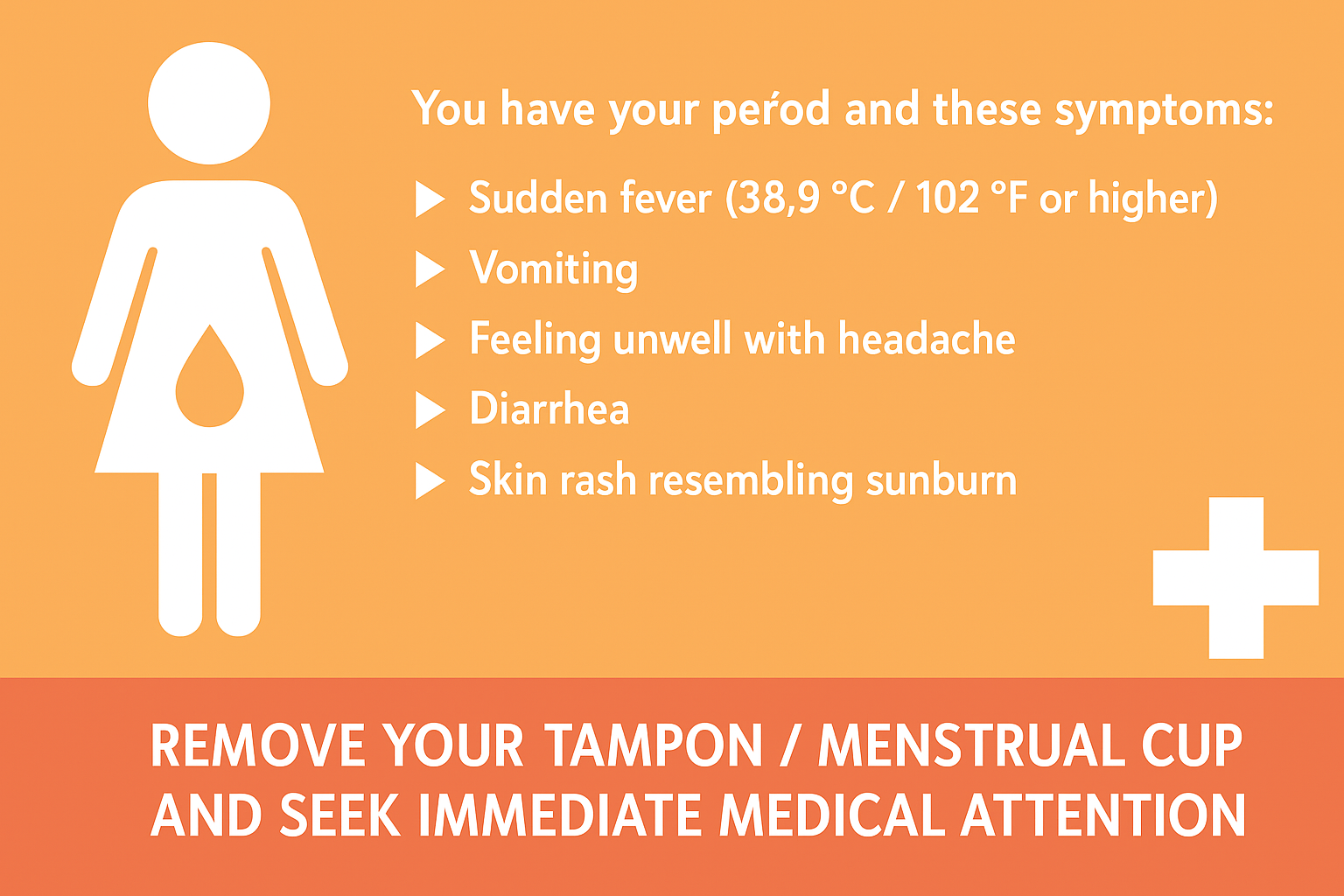
How does it occur?
Approximately 1% of the Swiss population carries Staphylococcus aureus producing the toxin TSST-1 in the vaginal area, often without being aware of it.
Research has shown that using an internal menstrual hygiene product (tampon or menstrual cup) for longer than the recommended time can trigger Toxic Shock Syndrome.
The bacteria can become trapped in the vagina, multiply excessively, and release the toxin TSST-1 into the bloodstream, leading to shock and damage to vital organs such as the liver, lungs, and kidneys.
In severe cases, Toxic Shock Syndrome can result in tissue necrosis, amputation of body parts, or even death.
Recommendations
- Avoid using internal menstrual products if you have previously been diagnosed with menstrual Toxic Shock Syndrome
- Always follow the specific usage instructions for each product. Tampons should never be worn for more than 6 hours
- Choose a tampon with an absorbency level appropriate for your menstrual flow
- Never use a tampon outside of your menstrual period
- Wash your hands thoroughly before and after changing your menstrual product